“…if you fish for the glory you catch the darkness too… when you hook twice the glory you hook twice the fear.” — Sheila Watson
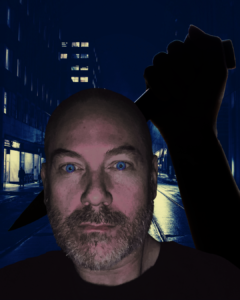 CANADA IS often portrayed as friendly, relaxed, and picturesque, but readers here have a long-standing love for fiction that dives into shadows, secrets, and emotional complexity. The stark bleakness of cold, modern cities, with their sterile glass-and-concrete towers, can be powerfully atmospheric. But there’s something about the vast landscapes, long winters, and quiet expanses that invites darker storytelling, ones that explore what happens beneath the surface of ordinary lives.
It’s no surprise, then, that dark fiction resonates so deeply with Canadian readers; it’s precisely this atmosphere that I aim to capture in my work. While I write predominantly within the thriller genre, my forays into other genres, such as gay paranormal romance and horror, are equally shaped by this aesthetic, and are better for it.
Part of this connection comes from geography itself. Much of Canada is shaped by isolation: remote towns, endless forests, cold seasons that push people indoors, and stretches of silence that feel both peaceful and unsettling. These environments naturally fuel introspection and set the stage for narratives in which physical space mirrors psychological tension. I often lean into this, using landscapes not just as backgrounds but as emotional amplifiers. In my stories, a dimly-lit office in a monstrous skyscraper or a lonely road by a cornfield at sunrise can evoke the same unease as a hidden motive or a buried secret.
Do Canadian readers embrace moral ambiguity more readily than readers of traditional hero-driven narratives? Interesting to ponder. There’s definitely an appreciation here for characters who are flawed, conflicted, or caught in situations where right and wrong blur together. I strive for depth. My characters tend to resist neat categories, even as I’m drawn to complex, even conflicting labels. Chaos is creativity? It definitely can be. Because of that, I feel they transform from two-dimensional creations into real, complex characters whose choices make sense, even when unsettling. Oh, and those times that they don’t make sense? Maddening in the best way. This emotional authenticity reflects the Canadian preference for nuance over spectacle, for character over caricature.
 That preference is rooted in the country’s literary tradition. Canadian storytelling has long gravitated toward introspection, subtle tension, and emotional realism, qualities found in the works of authors such as Farley Mowat, Margaret Atwood, Ann-Marie MacDonald, Michael Rowe, Marcus Hawke, Adam Pottle, and Sinclair Ross, among many others.
I hope that my fiction sits comfortably within that lineage, blending suspense with the kind of emotional depth that makes readers feel not just intrigued, but implicated. And that the darkness in my writing never feels gratuitous; it grows from the fractures in relationships, the quiet disappointments, the unspoken pressures and betrayals that shape people, some more than they realize.
For many Canadian readers, dark fiction is not defined by shock or violence, though those elements shape its tone. It’s about exploring human vulnerability in a safe, reflective way. Themes like isolation, guilt, fear, pursuit, and identity resonate because they reflect lived experiences, especially in a country where solitude—literal or emotional—is part of everyday life. I don’t shy away from these truths. I want my stories to linger on the emotional cost of events, not just the events themselves, and that honesty deepens their impact.
As Canada’s thriller and suspense scene continues to flourish, I wish to play a role in defining its voice. My combination of atmosphere, moral complexity, and psychological insight makes my work in this genre uniquely Canadian, yet universally gripping. My goal is to capture the kind of darkness that doesn’t overwhelm but illuminates, a darkness that maybe helps readers understand themselves more clearly.
Dark fiction resonates in Canada because it echoes the country’s landscape, culture, and emotional  rhythms. I seek to tap into that resonance, offering stories that feel intimate, chilling, and deeply human. And also queer, I cannot overlook that aspect. Unapologetically so. Some of my books more than others, but it’s always present. I write dark Canadian fiction shaped by queer emotional realities, like my own.
For LGBTQ+ people, isolation has never been merely geographic. It has been social, emotional, and at times internal, a negotiation between safety and visibility, belonging and self-preservation. In that sense, the Canadian landscape becomes more than a backdrop; it mirrors the experience of inhabiting vast, quiet spaces that are often not built with you in mind.